
The TUC‘s latest data tells a story worth celebrating.
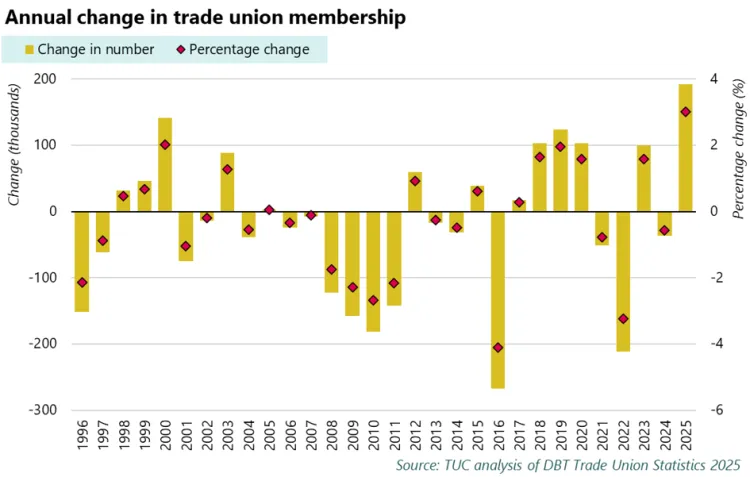
In 2025, trade union membership in the UK rose by 192,000 to reach 6.57 million; this is the highest level since 2020 and the largest single-year increase since current records began in 1995. This is brilliant news for the importance and power of Trade Unions.
But good news can create new challenges. For the teams responsible for running unions day to day, record membership growth directly impacts workload.
Here we consider the key takeaways highlighted by the latest findings and the potential impact on unions.
Key trends identified in the TUC report
There are a few patterns that unions should be paying close attention to.
- Private sector density remains stubbornly low at 12.1%. The growth is real, but there is a big opportunity to organise further, particularly in industries where union presence has historically been low.
- New workplace access rights, following the repeal of the Trade Union Act 2016, give unions a genuine structural opening to accelerate organising work.
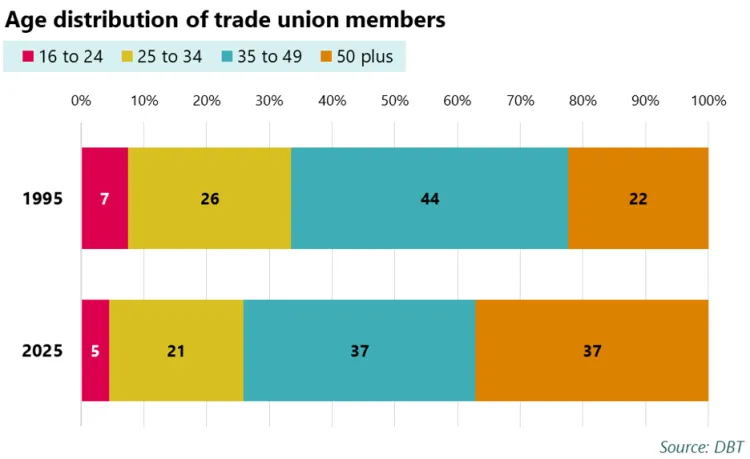
- The membership base is ageing – 37% of union members are now aged 50 or over, compared to just 22% in 1995. Retaining experienced members while building meaningful engagement with younger workers requires a very different approach and different data.
Growth is only possible if your systems can keep up
Rapid membership growth puts real pressure on the infrastructure behind it:
- New members need to be onboarded accurately and quickly.
- Existing records need to stay clean as the volume increases.
- Communications need to be relevant and timely, not generic blasts that treat a 28-year-old digital worker the same as a 55-year-old in the public sector.
For leadership teams, the ability to see where engagement is strongest, and where lapse risk is highest, becomes more important as the numbers grow.
Check out our post on engagement scoring for more retention and engagement.

Why union-specific technology matters more now
Unlike iMIS for Unions, generic CRM platforms weren’t designed with unions in mind. Branch hierarchies, subscription models, collective bargaining records, member engagement tracking, and the complex relationship between individual members and their workplace context aren’t standard CRM features. They’re workarounds at best, and technical debt at worst.
The unions that will make the most of this opportiunity are the ones whose technology is ready to support it. This includes a single, accurate member record at the centre, integrations that keep data flowing between systems without manual intervention, and reporting that gives every team the visibility they need to make informed decisions.
Final thoughts
The conditions for union growth in the UK and Ireland are as strong as they’ve been in a generation: the legislative environment has shifted, organising efforts are paying off, and workers are looking for collective voice in ways they weren’t before.
The question isn’t whether your union will grow, it’s whether the technology behind your union is ready to support what comes next.
iMIS for Unions is a purpose-built template for the iMIS system, designed specifically to meet the unique needs of trade unions with everything they need to manage members, organisers, and operations – all in one web-based system.
This configurable solution enhances operational efficiency by streamlining membership management, communication, and financial tracking.
Additional resources for you
If you liked this post, check out our other articles on similar topics.

How to stop data silos costing you members
Conclusions from our recent data-silos themed webinar

5 mistakes associations and unions make when looking for a new CRM
Zentso’s Co-Founder and CRO shares a practical guide for membership organisations thinking about change

Why generic CRMs fail unions and what to look for instead
vWhat to look for in a union management system