
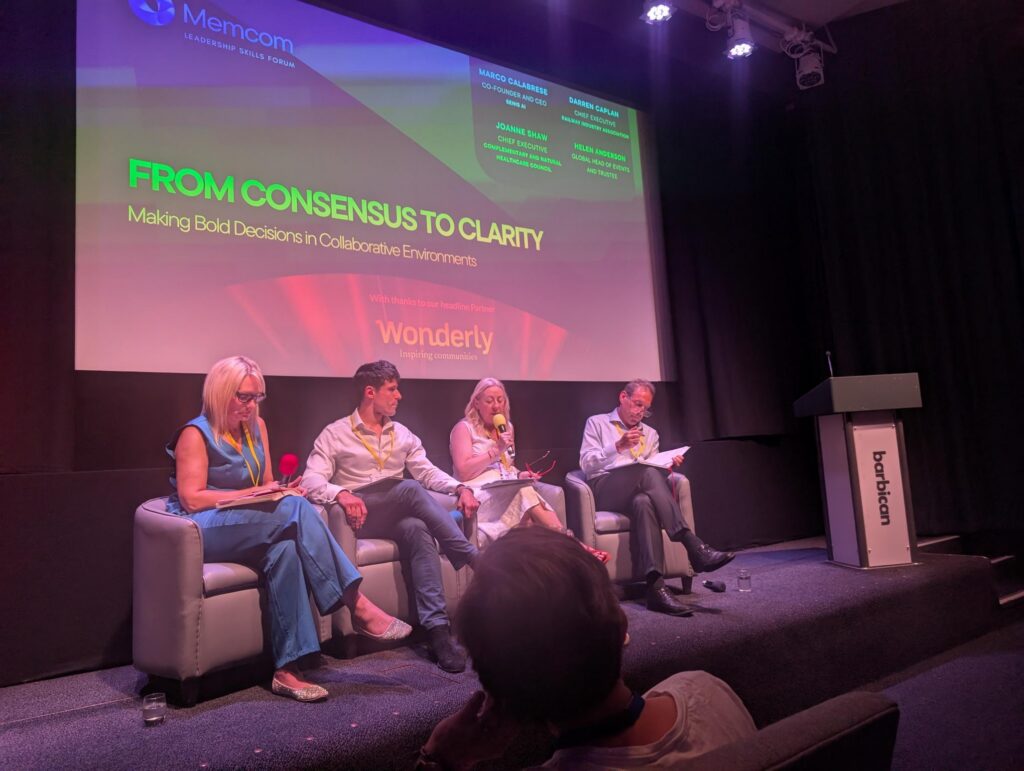
On the 8th July 2026, Team Zentso attended Memcom’s Leadership Skills Forum at the Barbican. The event brought together C-level executives from membership organisations and associations. There was a range of educational sessions aimed at sharing knowledge and advancing the skills of leaders. Here we share our key takeaways from the sessions we attended.
5 key leadership skills for leaders of membership organisations
1. Understanding members
A recurring theme throughout all the sessions was the need to put members first. Constantly ask yourself ‘what would add value for our members?’. Giles Grant, Chief Executive Officer at UK Cyber Security Council, shared a handy acronymn ADITLOYC (a day in the life of your customer). This process helps understand what challenges your members are facing and how to overcome them.
2. Communication
Needless to say, the world is constantly changing and when living in uncertain times it’s even more important to communicate clearly. All staff should have clear channels of communication. Strategy is often seen as a leadership skill, but the strategy needs to be clearly communicated and adopted at all levels. This is important to foster a sense of vision and purpose.
3. Judgement making
Making decisions isn’t always easy. But your data should be readily available to make this process easier. Leaders have to make effective decisions even if there are gaps in data. One panellist shared that you need to be ‘forensically curious’ – ask the questions behind the data.
Sara Robertson, Chief Executive of Institute of Translation and Interpreting, shared that when she’s making decisions she asks the question ‘how much are we willing to lose?’. Essentially, she considers what the impact would be if the plan didn’t work, particularly with the risks and costs associated. Weighing up risks and benefits, and making databacked decisions is essential for decision making.

4. Resillience
Paul Jobson, Chief Executive of Royal Institution of Naval Architects, shared that he doesn’t actually like the term resilience, he prefers perseverance. This helps set a sense of direction and focuses on a sense of continuation, not just being able to recover when things go wrong.
The panel how there needs to a distinction between making decisions as a leader and personal decisions. This is easier said than done! When making decisions, you have to be subjective, they aren’t personal. When things do go wrong, it’s good to think of whether it will matter in 2 weeks time – is it worth dwelling on?
5. Getting support from the board
Let’s face it trying to convince the board can be a significant challenge and can fill people with a sense of dread. When it comes to presenting ideas to the board, focus on how the idea proposed will help achieve the goals and objectives of your organisation. A good solution can be propose a smaller commitment first and make incremental changes. Tell a story: what was the thought process? What does the data show? How will it benefit members?
For those who sit on boards, the advice is to be curious. Ask questions about the data that isn’t presented in the report (and make sure you take time to read reports before the meeting!). Helen Anderson, Global Head of Events & Board member, shared how she feels the most important element of a board is diversity; diversity in backgrounds, roles, and thinking. A board is there to ensure proper governance of the organisation. Remember, you are one team, trying to deliver one purpose.
Zentso helps membership organisations align your technology with strategy, reduce digital transformation risk, and make systems work in practice.
With deep membership-sector expertise, we support you from strategy and implementation through to integration, adoption and the long-term success of your evolving organisation.
Additional resources for you
If you liked this post, check out our other articles on similar topics.

Understanding the short and long-term effects of AI adoption on the workforce
Balancing Progress, Employment, and Expertise in an AI-Driven Future

What a shift in global order means for NFPs
9 practical ways your membership organisation can thrive even in uncertain times

5 practical steps to smarter CRM selection for associations and unions
How to focus on what really matters in your next CRM project